

Quick answer: Ai jiu, commonly known as moxibustion, is a traditional Chinese medicine (TCM) practice that burns dried mugwort (Artemisia argyi) near or on the skin to warm specific points on the body. Practitioners use it to support circulation, ease muscle tension, and complement acupuncture. Today, ai jiu shows up in spas, home wellness kits, and integrative medicine clinics as a low-tech way to bring ancient heat therapy into modern self-care.
Wellness trends come and go, but some practices stick around because they actually work. Ai jiu is one of them. This centuries-old TCM technique has quietly made its way from herbal medicine cabinets in rural China to wellness studios in Los Angeles, London, and Sydney. If you’ve seen someone holding a smoking stick near their skin in an acupuncture clinic or spotted mugwort-based products in a wellness store, you’ve encountered ai jiu without necessarily knowing its name.
So what exactly is ai jiu, and why are modern wellness practitioners still reaching for a plant-based therapy that predates modern medicine by thousands of years? This guide breaks down what ai jiu is, how it works, and how you can thoughtfully incorporate it into a contemporary self-care routine.
What is ai jiu in traditional Chinese medicine?
Ai jiu (艾灸) translates roughly to “mugwort moxibustion.” It’s the TCM practice of burning dried, aged mugwort leaves to create a therapeutic heat source that’s applied near acupuncture points or areas of the body experiencing discomfort. The word “moxa” itself comes from the Japanese “mogusa,” but the practice has roots throughout East Asian medicine, including Chinese, Japanese, and Korean traditions.
In TCM theory, the body’s vital energy, or qi, flows through channels called meridians. When qi becomes blocked or the body experiences what TCM calls “cold” or “dampness,” practitioners believe this can lead to pain, stiffness, or illness. Ai jiu is used to introduce warmth into the body, encouraging qi to move more freely and helping to counteract this internal cold or damp stagnation.
Mugwort was chosen specifically for this practice because TCM classifies it as a warming herb with properties that penetrate deeply into the body’s tissues when burned, rather than simply warming the skin’s surface.
How is ai jiu different from acupuncture?
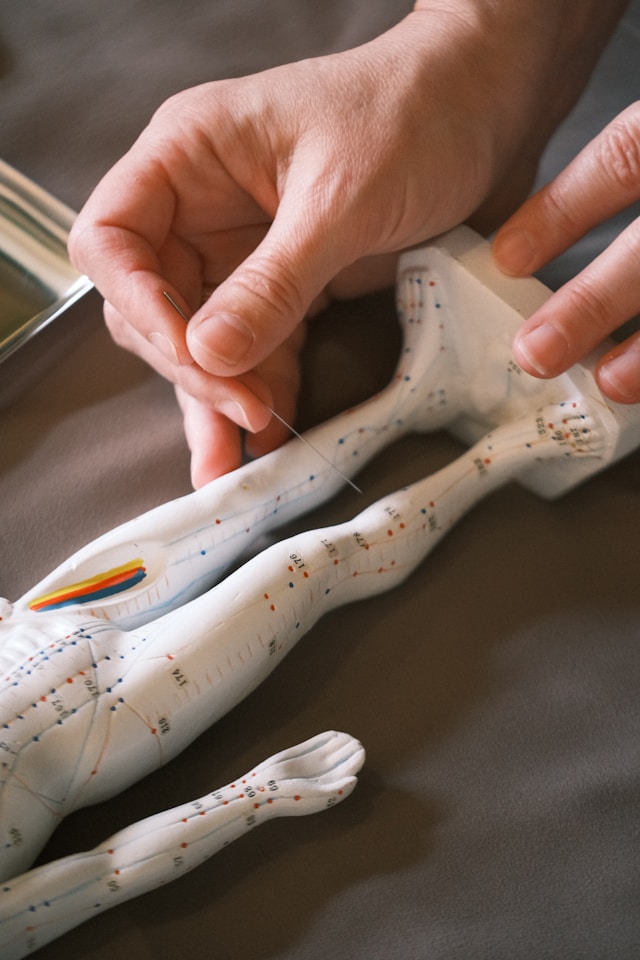
Ai jiu and acupuncture are closely related but distinct techniques. Acupuncture involves inserting thin needles into specific points along the body’s meridians. Ai jiu, by contrast, uses heat rather than needles to stimulate those same points.
The two practices are frequently combined. A TCM practitioner might insert an acupuncture needle and then attach a small piece of burning mugwort to the top of the needle, allowing the heat to travel down the needle into the point being treated. This combined approach is sometimes called “warm needle” therapy.
Choose acupuncture alone if needle stimulation without added heat is preferred, or if the condition being treated doesn’t call for added warmth. Choose ai jiu if the goal is specifically to introduce heat, such as for conditions TCM associates with cold or poor circulation, or for patients who prefer not to use needles at all.
What are the different methods of applying ai jiu?
There isn’t just one way to practice moxibustion. Practitioners typically choose a method based on the treatment goal and the patient’s comfort level.
Direct moxibustion
A small cone of mugwort is placed directly on the skin and lit, then removed or extinguished before it burns too close to the skin. This method delivers concentrated heat but requires a skilled practitioner to avoid burns.
Indirect moxibustion
A mugwort stick, cigar-shaped and rolled tightly, is held a few centimeters above the skin without direct contact. This is the most common method used in modern clinics and is generally considered safer for at-home use.
Moxa on acupuncture needles
As mentioned above, a small amount of mugwort is placed on the handle of an inserted acupuncture needle to combine both therapies in a single treatment.
Moxa boxes and warming devices
Wooden or bamboo boxes hold burning moxa a safe distance from the skin, allowing for a broader area of the body to be warmed at once, such as the abdomen or lower back.
What conditions is ai jiu traditionally used for?
TCM practitioners have historically used ai jiu for a range of concerns tied to the concept of internal cold, poor circulation, and qi stagnation. Common traditional applications include:
- Muscle and joint stiffness, particularly in cold weather or damp climates
- Digestive discomfort, such as bloating or a sluggish digestive system
- Menstrual cramps and irregular cycles, where cold is believed to contribute to pain
- Low energy and fatigue, especially when linked to what TCM calls “yang deficiency”
- Turning breech babies, a specific and well-documented traditional use involving a point on the foot called Bladder 67 (Zhiyin)
It’s worth noting that while ai jiu has centuries of use within TCM, it should be viewed as a complementary practice rather than a replacement for evidence-based medical treatment, particularly for serious or chronic health conditions.
How does ai jiu fit into a modern wellness routine?
Modern wellness culture has embraced practices that offer sensory grounding, ritual, and a break from constant screen time. Ai jiu fits neatly into this shift for a few reasons.
It’s tactile and ritualistic. Lighting a mugwort stick, feeling its gentle warmth, and smelling its distinct herbal aroma creates a multisensory experience that many people find calming, similar to how aromatherapy or a warm bath might feel.
It pairs well with other self-care practices. People already using acupuncture, cupping, or herbal medicine often find moxibustion complements these existing routines rather than requiring an entirely new approach to wellness.
It offers an alternative for cold-sensitive bodies. Many people, particularly those who run cold or experience circulation issues, are drawn to ai jiu because it directly addresses that sensation of internal coldness that ice packs and cooling therapies don’t.
At-home kits have made it more accessible. Mugwort sticks and smokeless moxa patches are now sold online and in wellness stores, allowing people to try gentle forms of moxibustion without visiting a clinic, though guidance from a trained practitioner is recommended before starting.
Is it safe to try ai jiu at home?
Indirect moxibustion, where the burning mugwort stick doesn’t touch the skin, is generally considered the safest method for home use. Even so, a few precautions matter:
- Ventilation matters. Mugwort smoke has a strong smell and can trigger respiratory irritation in sensitive individuals or those with asthma. Always use it in a well-ventilated space.
- Avoid direct contact burns. Keep a safe distance between the burning stick and the skin, and never leave it unattended.
- Skip it during pregnancy unless guided by a professional. Certain moxibustion points are traditionally used to influence labor and fetal position, so it should only be used during pregnancy under the guidance of a qualified TCM practitioner.
- Consult a practitioner for specific health concerns. While general relaxation use is low-risk, using ai jiu to address a specific health condition is best done with a licensed TCM practitioner who can identify the correct points and technique.
What should you look for when choosing an ai jiu practitioner or product?
If you’re interested in trying ai jiu through a clinic, look for a licensed acupuncturist or TCM practitioner with specific training in moxibustion techniques. Many licensed acupuncturists incorporate moxa into their practice, so this is often as simple as asking during a consultation.
If you’re trying an at-home product, look for:
- Aged mugwort. TCM practitioners generally consider mugwort that has been aged for several years to burn more smoothly and gently than fresh mugwort.
- Smokeless or low-smoke options, if you’re sensitive to smoke or plan to use it in a shared living space.
- Clear instructions on distance and duration, since even indirect methods can cause discomfort if held too close for too long.
Bringing an ancient practice into a modern routine
Ai jiu has survived for thousands of years not because of trend cycles, but because generations of practitioners and patients have found real value in its warming, grounding effects. Whether you’re drawn to it for its traditional TCM applications or simply want to add a mindful, sensory ritual to your self-care routine, moxibustion offers something rare in modern wellness: a slow, deliberate practice in a culture that rarely asks us to sit still.
If you’re curious about trying ai jiu, start by speaking with a licensed acupuncturist or TCM practitioner. They can help identify whether moxibustion is a good fit for your specific needs and guide you toward a technique and frequency that feels right for your body.
Frequently asked questions about ai jiu
What does ai jiu smell like?
Burning mugwort has a strong, earthy, slightly smoky aroma, often compared to a mix of sage and dried herbs. Some people find it soothing, while others find it overpowering, so ventilation and personal tolerance matter when trying it for the first time.
How long does an ai jiu session typically last?
A typical moxibustion or ai jiu session lasts between 10 and 20 minutes per treatment area, though this varies depending on the practitioner’s assessment and the specific condition being addressed.
Can ai jiu be combined with acupuncture?
Yes. Combining moxibustion with acupuncture, often called warm needle therapy, is a common practice in TCM clinics and is considered safe when performed by a trained practitioner.
Who should avoid ai jiu?
People with certain skin conditions, those who are pregnant (without practitioner guidance), individuals with respiratory sensitivities to smoke, and those with a fever or acute inflammatory conditions should avoid moxibustion or consult a professional before trying it.
Is ai jiu backed by scientific research?
Moxibustion has been studied in the context of TCM and integrative medicine, particularly for its traditional use in turning breech babies and supporting circulation. As with many complementary therapies, research is ongoing, and it’s best used alongside, rather than in place of, conventional medical care.
