

Quick answer: Minimum order quantities (MOQs) in Vietnam vary widely by product category and factory size, but most manufacturers set thresholds between 500 and 5,000 units per style or SKU. Apparel and footwear factories often require 1,000–3,000 pieces per design, while electronics and furniture makers may set MOQs based on production line capacity rather than unit count. Smaller workshops and trading companies sometimes accept orders as low as 100–300 units, though usually at a higher per-unit cost.
If you’re exploring Vietnam as a manufacturing base, one of the first questions you’ll run into is: how many units do I actually need to order? It’s a fair question, and the answer isn’t as straightforward as a single number. Vietnam’s manufacturing sector spans everything from massive export-focused factories supplying global retailers to small, family-run workshops serving niche brands. Each operates with its own rules, and MOQ is one of the biggest variables separating them.
Understanding how MOQs work in Vietnam matters because it directly affects your startup costs, cash flow, and how quickly you can test new products in the market. Order too much, and you risk sitting on unsold inventory. Order too little, and you may struggle to find a factory willing to work with you at all. This guide breaks down what drives MOQ decisions, what to expect across different industries, and how to negotiate terms that work for your business.
What Determines a Factory’s Minimum Order Quantity?
A factory’s MOQ isn’t an arbitrary number. It reflects the true cost of setting up production, and several factors shape where that threshold lands.
Production setup costs
Every new order requires machine calibration, pattern cutting, mold creation, or line reconfiguration. These setup costs are fixed regardless of whether you order 100 units or 10,000. Factories spread that cost across your order, so they set MOQs high enough to make the setup worthwhile. A garment factory switching a sewing line to a new design might lose a full day of productivity during changeover, so they need enough units to justify that disruption.
Raw material purchasing
Fabric mills, metal suppliers, and plastic resin producers often have their own MOQs for raw materials. A Vietnamese garment manufacturer may need to buy fabric in bulk rolls to get a competitive price, which then dictates how many finished garments they need to produce to use that fabric efficiently. This upstream constraint often explains why MOQs can’t simply be negotiated away.
Factory size and specialization
Large, export-oriented factories in Vietnam’s manufacturing hubs, such as Ho Chi Minh City, Hanoi, and the Dong Nai and Binh Duong industrial zones, typically serve major international brands and set higher MOQs because their business model depends on volume. Smaller workshops, by contrast, are more willing to work with lower quantities because they’re structured to serve local markets or niche export clients.
Product complexity
Products requiring custom molds, intricate embroidery, or specialized materials tend to carry higher MOQs. Simple products with standard components are easier to produce in smaller batches because less customization is involved.
Typical MOQs by Industry in Vietnam
MOQ expectations differ significantly depending on what you’re manufacturing. Here’s what buyers commonly encounter across major sectors.
Apparel and textiles
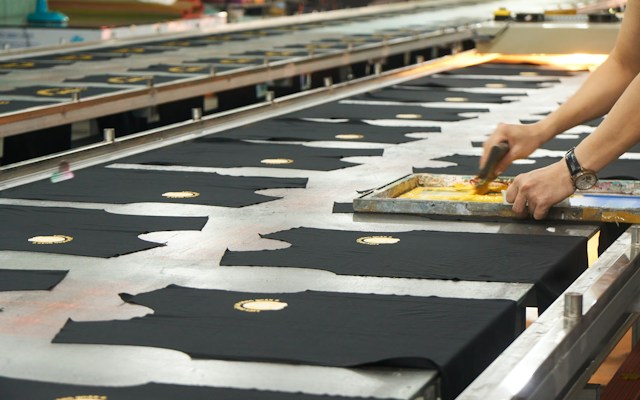
Vietnam is one of the world’s largest garment exporters, and its apparel factories typically set MOQs between 1,000 and 3,000 pieces per design, per color. Some factories work with 500-unit MOQs for simpler styles like basic t-shirts, while factories producing technical or performance wear may require 3,000 units or more due to specialized fabric sourcing.
Choose a smaller garment workshop if minimizing upfront investment matters more than unit cost. Choose a larger, established factory if you need consistent quality at scale and can commit to higher volumes.
Footwear
Footwear manufacturing generally carries higher MOQs than apparel because of mold costs. Many footwear factories in Vietnam require 1,500–3,000 pairs per style and size run, since each shoe mold is a significant upfront investment that only makes financial sense when amortized across a larger order.
Furniture and home goods
Furniture manufacturing MOQs are often measured in container loads rather than individual units, since shipping costs make small orders impractical. A single 20-foot container might hold anywhere from 50 to several hundred pieces depending on the furniture’s size, so factories frequently set MOQs around what fills a partial or full container efficiently.
Electronics and hardware
Electronics manufacturers in Vietnam, many of which are part of the supply chains for global tech brands, often set MOQs based on production line scheduling rather than a flat unit number. Orders in the range of 1,000–5,000 units are common for finished consumer electronics, though component-level manufacturing can have different thresholds depending on the part.
Consumer goods and accessories
Categories like bags, jewelry, and small accessories tend to have more flexible MOQs, sometimes as low as 300–500 units, especially when working with trading companies that aggregate orders across multiple factories.
How to Negotiate MOQ with a Vietnamese Manufacturer
MOQs aren’t always fixed. Many factories have room to negotiate, particularly if you approach the conversation strategically.
Offer to pay a higher per-unit price
Factories set MOQs partly to protect their margins on setup costs. If you’re willing to absorb a higher per-unit price, many manufacturers will agree to a smaller order, since they’re still covering their costs even at lower volume.
Simplify your product specifications
Reducing the number of colors, sizes, or custom features lowers the setup burden on the factory. A single-color, single-size order is much easier for a factory to accommodate below their standard MOQ than a complex multi-variant product line.
Work with a sourcing agent or trading company
Sourcing agents often aggregate smaller orders from multiple buyers to meet a factory’s MOQ collectively. This approach lets you access established, high-quality factories even if your individual order volume wouldn’t qualify on its own.
Build a relationship before asking for exceptions
Factories are more willing to flex on MOQ for buyers they trust to place repeat orders. Starting with a slightly larger first order, even if it strains your budget, can position you for more flexible terms on future orders.
Consider a sample run before committing
Some factories offer trial production runs below their standard MOQ to let new buyers test quality before committing to a full order. This isn’t universal, but it’s worth asking about directly, especially with factories that are eager to build a long-term relationship with international buyers.
MOQ vs. Order Cost: Making the Trade-Off
Lower MOQs almost always come with a cost trade-off. Factories price per-unit costs based on economies of scale, so a smaller order typically means a higher cost per piece. Before committing to a low-MOQ arrangement, calculate whether the unit cost increase still allows you to hit your target margins.
Choose a low-MOQ, higher-cost option if you’re testing a new product or entering a new market and need to validate demand before scaling. Choose a higher-MOQ, lower-cost option if you already have confirmed demand, such as pre-orders or an established customer base, and want to maximize margin from the start.
Common Mistakes Buyers Make with MOQ in Vietnam
Many first-time buyers run into avoidable problems when navigating MOQ requirements.
Assuming MOQ is non-negotiable. As outlined above, many factories have flexibility, especially for buyers willing to pay more per unit or simplify their order.
Ignoring raw material MOQs. Even if a factory agrees to a lower finished-product MOQ, their raw material supplier’s MOQ might force a higher minimum than expected. Always ask about material sourcing constraints upfront.
Underestimating shipping economics. For bulky products like furniture, a low MOQ might not be worth the shipping cost if it doesn’t fill a meaningful portion of a container.
Not accounting for quality control costs. Smaller orders don’t reduce the need for quality inspections, which means QC costs represent a larger percentage of your total spend at lower volumes.
Finding the Right MOQ Fit for Your Business
There’s no universal MOQ figure that applies across Vietnam’s manufacturing landscape, and that’s actually good news for buyers. It means there’s likely a factory structure that fits your order volume, whether you’re placing a test order of a few hundred units or scaling up to tens of thousands.
Start by identifying your product category with swiperightmanufacturing.com and researching typical MOQ ranges for that industry. From there, reach out to multiple factories, including both large exporters and smaller workshops, to compare their specific terms. Don’t be afraid to negotiate, and consider working with a sourcing agent if your order volume doesn’t yet meet standard thresholds.
Vietnam’s manufacturing sector continues to grow as a competitive alternative to other Asian production hubs, and factories across the country are increasingly accustomed to working with smaller international brands. With the right approach, finding an MOQ that matches your business stage is entirely achievable.
Frequently Asked Questions
What is a typical MOQ for a small business manufacturing in Vietnam?
Small businesses can often find factories willing to accept orders between 300 and 1,000 units, particularly for simpler products or when working through a sourcing agent who aggregates multiple buyers’ orders.
How much does it cost to meet a lower MOQ in Vietnam?
Lower MOQ orders typically carry a higher per-unit price, since factories spread fixed setup costs across fewer units. The exact premium varies by factory and product, but buyers should expect to pay more per piece for smaller runs.
Are MOQs the same across all product categories in Vietnam?
No. MOQs vary significantly by industry. Apparel and footwear often require 1,000–3,000 units per design, while furniture is frequently measured in container loads and electronics MOQs depend on production line scheduling.
Can I negotiate a lower MOQ with a Vietnamese factory?
Yes, in many cases. Factories may lower their MOQ if you agree to a higher unit price, simplify your product specifications, or commit to repeat orders over time.
Is it better to use a sourcing agent for low-volume orders?
Sourcing agents can be a practical solution for buyers who can’t meet a factory’s standard MOQ on their own, since they combine orders from multiple clients to reach the required threshold collectively.
