
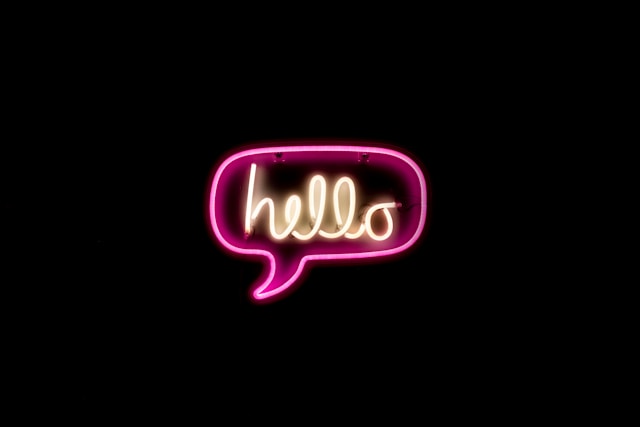

TL;DR: LED 3D signage combines dimensional lettering and lighting to create eye-catching displays that draw foot traffic, reinforce brand identity, and outperform traditional flat signs. This post covers six creative LED 3D signage ideas—from backlit channel letters to sculptural logo displays—to help business owners make a bold, lasting first impression.
Walk down any busy commercial strip and you’ll notice something: the businesses that stop you in your tracks all have one thing in common. Their signage does more than label a storefront—it commands attention. Flat, printed signs fade into the background. LED 3D signage doesn’t.
The global signage market is growing rapidly, and LED technology is leading the charge. Businesses that invest in dimensional, illuminated signage report stronger brand recall, more foot traffic, and a perception of higher quality from potential customers. The reason is simple: humans are wired to notice depth, light, and movement. A sign that offers all three is one that people simply can’t ignore.
But “LED 3D signage” is a broad category. The right approach for a boutique hotel looks very different from what works for a fitness studio or a quick-service restaurant. This guide breaks down six of the most effective LED 3D signage ideas, explaining how each works, what makes it impactful, and which type of business stands to gain the most from it.
Whether you’re opening a new location, rebranding, or simply tired of blending in, these ideas will give you a concrete starting point for signage that truly works.
What Makes LED 3D Signage More Effective Than Traditional Signs?
Before getting into specific ideas, it’s worth understanding why LED 3D signage outperforms conventional alternatives.
Traditional flat signs—printed banners, vinyl wraps, painted boards—are two-dimensional and passive. They rely entirely on ambient light, which means they lose visibility at night, in overcast conditions, or in cluttered visual environments.
LED 3D signs solve these problems by adding two powerful elements: dimension and light. Dimension creates shadow and depth, which the human eye naturally finds more engaging than a flat surface. Light ensures visibility around the clock, in any weather, and from greater distances.
Add to that the durability of modern LED technology—a lifespan of up to 50,000 hours, low energy consumption, and minimal maintenance—and the business case for making the switch becomes compelling.
Now, here are six signage ideas worth considering.
1. Backlit Channel Letters: The Gold Standard for Storefront Visibility
Channel letters are individually crafted, three-dimensional letters mounted directly to a building facade or raceway board. Each letter is hollow and houses LED modules inside, which illuminate the face, halo, or both.
This is one of the most widely used LED 3D signage formats for a reason. The result is clean, professional, and highly legible—both during the day, when the depth of the lettering stands out, and at night, when the illumination takes over.
Face-lit channel letters produce a front glow, making the color of the lettering highly visible from distance. Halo-lit (or reverse-lit) channel letters project light backward onto the mounting surface, creating a sophisticated glowing outline effect often associated with premium brands. Combination-lit letters offer both simultaneously.
Best for: Retail stores, restaurants, hotels, salons, and any business where the facade is the primary advertising surface.
Pro tip: Opt for custom letter shapes that match your brand font exactly. Generic letterforms undermine the premium effect that channel letters are designed to create.
2. LED Illuminated Logo Bugs: Turn Your Brand Mark Into a Landmark
A logo bug is a dimensional, illuminated version of a brand’s logo or icon—separate from (or combined with) the business name. Think of the Apple logo glowing on a MacBook lid, scaled up and mounted on a building or interior wall.
Logo bugs work particularly well for brands with strong visual identity marks—an icon, emblem, or symbol that carries meaning independently of text. When crafted in three dimensions and backlit or internally lit with LEDs, a logo bug becomes a focal point rather than a secondary detail.
For interior applications, an LED-illuminated logo mounted behind a reception desk or on a feature wall signals professionalism instantly. For exterior use, it functions as a visual anchor that draws the eye from a distance.
Best for: Corporate offices, hotels, gyms, automotive dealerships, and franchise businesses with established visual identity systems.
Pro tip: Combine your logo bug with brushed metal or acrylic face materials for a high-end finish that photographs beautifully—a bonus for social media visibility.
3. 3D LED Cabinet Signs: Versatile, Durable, and Highly Customizable
Cabinet signs (also called box signs or lightbox signs) are enclosed, weatherproof enclosures with a translucent front face. In their traditional form, they used fluorescent tubes. Modern versions use LED arrays, delivering brighter, more uniform illumination with significantly lower energy consumption.
What makes cabinet signs “3D” is the depth of the housing itself, combined with the option to add dimensional elements to the face—raised lettering, logo cutouts, or layered graphic panels. The result is a sign that reads as flat from a distance but reveals depth and texture up close.
Cabinet signs are especially practical for businesses that need to display multiple pieces of information (name, logo, tagline, hours) in a single, coherent format. They’re also one of the most cost-effective ways to achieve illuminated signage at scale.
Best for: Shopping centers, fast food franchises, service stations, medical clinics, and businesses requiring standardized signage across multiple locations.
Pro tip: Choose a double-sided cabinet sign for locations where pedestrian or vehicle traffic approaches from both directions.
4. Neon-Style LED Flex Signs: Personality and Warmth Without the Fragility
Traditional glass neon signs have an undeniable charm—warm, glowing, and unmistakably analog. The problem is that glass neon is fragile, expensive to produce, energy-hungry, and difficult to repair.
LED flex neon replicates the look using flexible LED strip encased in a silicone or PVC tube. The result is visually nearly indistinguishable from glass neon but far more durable, versatile, and affordable to produce.
For businesses targeting a younger demographic or cultivating a lifestyle brand, LED neon signs offer an opportunity to create genuinely Instagram-worthy moments. A well-designed neon-style phrase, logo, or icon mounted on a feature wall or above a bar becomes a magnet for user-generated content—which is essentially free advertising.
Best for: Bars, cafes, boutique retail, beauty salons, creative studios, and event spaces.
Pro tip: Design your LED neon sign around a phrase or visual element that’s specific to your brand, not a generic motivational quote. Specificity is what makes signage memorable and shareable.
5. Dimensional Wayfinding Signs: Guide Customers and Reinforce Brand at Every Turn
Wayfinding signage is often treated as purely functional—arrows, directories, room labels. But dimensional, LED-illuminated wayfinding transforms a navigational necessity into a branding opportunity.
Three-dimensional wayfinding signs combine backlit panels, raised lettering, and LED edge-lighting to create a cohesive system that guides visitors through a space while reinforcing visual identity at every touchpoint. In large venues—hospitals, hotels, airports, corporate campuses—this consistency has a measurable effect on visitor experience and perceived professionalism.
The practical benefits are significant too. Illuminated directional signs are easier to read, especially in low-light conditions. Raised lettering and Braille additions support accessibility compliance. And a well-designed wayfinding system reduces staff time spent giving directions.
Best for: Hotels, hospitals, universities, corporate headquarters, shopping malls, and entertainment venues.
Pro tip: Work with a signage designer to develop a wayfinding system that uses your brand colors, fonts, and materials consistently—so every sign feels like part of a unified experience rather than an afterthought.
6. Sculptural LED Installations: When Your Signage Becomes a Destination
The most ambitious form of LED 3D signage isn’t attached to a wall at all. Sculptural LED installations are freestanding, three-dimensional structures—often large-scale—that function simultaneously as signage, art, and experience.
Think of the giant illuminated letters outside a flagship retail store, a glowing brand sculpture in a hotel lobby, or an LED-lit architectural feature at the entrance of a corporate campus. These installations don’t just identify a business; they create a reason to stop, look, and photograph.
The technology behind sculptural LED installations has advanced considerably. Programmable LED controllers allow for dynamic light shows, color-changing effects, and synchronized animations. This means a single installation can look different depending on time of day, season, or campaign—extending its marketing value well beyond its physical presence.
Best for: Flagship retail stores, luxury hotels, corporate headquarters, entertainment venues, and brands investing in experiential marketing.
Pro tip: If budget is a constraint, start with a smaller sculptural element—like a dimensional logo sculpture in a reception area—before scaling to exterior installations.
How to Choose the Right LED 3D Signage for Your Business
With six strong options on the table, narrowing down the right choice comes down to four key variables:
- Location: Exterior signs prioritize weatherproofing, visibility from distance, and compliance with local signage codes. Interior signs can focus more on aesthetics and brand storytelling.
- Budget: Channel letters and cabinet signs offer the best value for exterior visibility. Sculptural installations deliver the highest impact but require a larger investment.
- Brand personality: A law firm and a cocktail bar have very different visual languages. Your signage should reflect yours—not default to whatever looks generic.
- Customer journey: Map where your customers first encounter your business. A ground-floor retail store needs strong street-level signage. A business on a busy highway benefits from large-format, high-contrast signs readable from a vehicle.
When in doubt, consult a professional signage company before committing to materials and formats. The design decisions made early in the process have a compounding effect on the final result.
Make Your Signage Work as Hard as You Do
LED 3D signage is one of the highest-ROI investments a physical business can make. A great sign works 24 hours a day, seven days a week, without a salary or sick days. It builds brand recognition passively, attracts foot traffic organically, and signals quality before a customer ever walks through the door.
The six ideas covered here—channel letters, logo bugs, cabinet signs, LED neon, dimensional wayfinding, and sculptural installations—represent a spectrum from practical to spectacular. The right choice depends on your business type, location, and goals. But the wrong choice is always the same: doing nothing and hoping a flat, generic sign does the job.
Start by identifying which of the six formats aligns most closely with your brand and budget. Then work with a qualified signage professional to bring it to life with materials and lighting that genuinely reflect your business. Your competition is already fighting for attention. LED 3D signage is how you win that fight.
Frequently Asked Questions About LED 3D Signage
What is LED 3D signage?
LED 3D signage refers to dimensional signs that incorporate LED lighting to create depth, illumination, and visual impact. Common formats include channel letters, cabinet signs, sculptural installations, and LED neon flex signs. Unlike flat printed signs, LED 3D signs are visible day and night and are designed to attract attention from greater distances.
How long do LED 3D signs last?
Most LED modules used in commercial signage have a rated lifespan of 50,000 hours or more. For a sign illuminated 12 hours per day, that translates to over 11 years of use before the LEDs reach 70% of their original brightness—the standard benchmark for LED lifespan.
Are LED 3D signs expensive to run?
LED technology is significantly more energy-efficient than fluorescent or neon alternatives. A typical LED channel letter sign uses 50–70% less electricity than an equivalent fluorescent cabinet sign, reducing ongoing operating costs considerably.
Do I need council or local government approval for exterior LED signage?
In most jurisdictions, yes. Exterior signs are subject to local planning and signage codes that regulate size, placement, brightness, and illumination hours. Always check with your local council or municipality before installing exterior LED signage.
What type of LED 3D sign is best for a small retail business?
For most small retail businesses, backlit channel letters offer the best combination of visibility, professionalism, and value. They’re durable, customizable, and highly effective for street-level storefronts. LED neon flex signs are a strong secondary option for businesses targeting a younger, lifestyle-oriented audience.
Can LED 3D signs be used indoors?
Yes. Many LED 3D signage formats—including logo bugs, LED neon signs, dimensional wayfinding systems, and sculptural installations—are specifically designed for interior use. Indoor LED signage is particularly effective in reception areas, retail floors, event spaces, and hospitality environments.
