
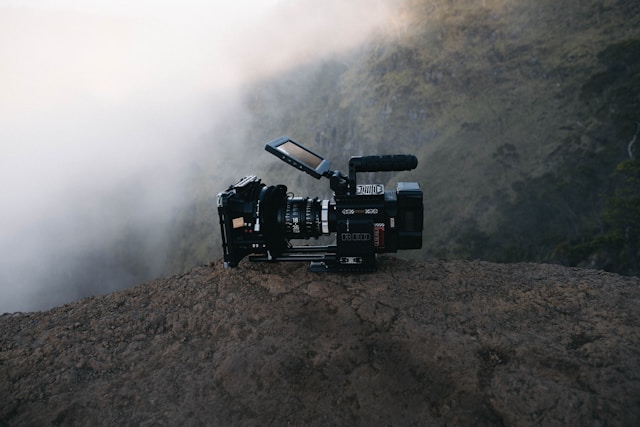

TL;DR: Smartphone cameras have improved dramatically, but professional video production still outperforms them where it matters most. For high-stakes business moments—product launches, brand films, corporate events, and more—professional videography delivers the quality, consistency, and credibility that smartphone footage simply cannot match.
You’ve seen it happen. A company spends months preparing for a product launch, the big day arrives, and someone hits record on an iPhone. The footage is shaky. The audio cuts out during the CEO’s keynote. The lighting makes everyone look like they’re being interrogated. By the time the video goes live, it looks less like a brand milestone and more like a hastily filmed YouTube vlog from 2009.
Smartphones are remarkable tools. They’ve democratized content creation and made it possible for anyone to capture a moment at a second’s notice. For casual social content, behind-the-scenes clips, or quick internal updates, they’re perfectly adequate. But there’s a meaningful difference between “adequate” and “professional”—and that difference becomes painfully obvious when the stakes are high.
Professional video production isn’t just about image quality. It’s about controlled lighting, clean audio, skilled direction, and post-production editing that transforms raw footage into something that actually reflects the caliber of your brand. When a business cuts corners on video for the wrong moments, the result isn’t just a subpar video—it’s a signal to clients, partners, and the public that the business doesn’t take itself seriously.
Here are seven moments where that risk is simply too great.
1. Product Launches and Reveals
A product launch is one of the most significant marketing events in a business’s calendar. The video content produced around it will live on your website, in paid ad campaigns, across social media, and potentially in press coverage. It needs to hold up under scrutiny—and under a wide range of screen sizes, from mobile phones to 4K monitors.
Smartphone footage struggles here for several reasons. Dynamic range is limited, meaning bright highlights blow out and dark shadows lose detail. Depth of field is difficult to control, so products don’t separate cleanly from their backgrounds. And without proper lighting setups, textures, colors, and finishes—the details that make a product desirable—simply don’t translate.
Professional videographers bring cinema-grade lenses, lighting rigs, and color grading workflows that make products look like they belong in a glossy campaign. Because they do.
2. Brand Films and Company Story Videos
A brand film is your business’s handshake with the world. It communicates who you are, what you stand for, and why someone should choose you over a competitor. These videos often serve as the first point of contact for new clients or recruits, and they tend to live on your homepage—the highest-traffic page on your site.
Producing a brand film on a smartphone sends an unintended message: that you’re either unaware of the standard or unwilling to meet it. Neither reflects well on a business trying to build credibility.
A professionally produced brand film, by contrast, brings together a director, cinematographer, sound designer, and editor—each contributing expertise that no single device can replicate. The result is a cohesive, polished narrative that earns trust before a single word of copy is read.
3. Executive Interviews and Thought Leadership Content
When a CEO, founder, or senior leader speaks on camera, the production quality of that video reflects directly on their credibility—and by extension, the credibility of the organization they represent. Grainy footage, poor audio, and unflattering lighting undermine even the most compelling message.
Executive interviews and thought leadership videos are regularly shared in investor decks, on LinkedIn, in media pitches, and at conferences. They need to look authoritative. That means a proper camera setup with controlled depth of field, a professional microphone that captures clean dialogue, and lighting that flatters without looking artificial.
The content is only half the equation. How it looks and sounds determines whether the audience stays to hear it.
4. Client Testimonial Videos
Social proof is one of the most powerful sales tools available to a business. A genuine client testimonial, well-delivered, can do more to convert a prospect than any amount of marketing copy. But only if it looks credible.
Smartphone-filmed testimonials often look improvised—like they were captured on a whim rather than planned and executed with intention. That improvised quality, ironically, makes them feel less authentic rather than more. Viewers are increasingly sophisticated. They can tell the difference between a business that values its clients’ time and one that handed them a phone and pressed record.
A professionally filmed testimonial signals that the business takes the story seriously. Clean audio, flattering lighting, and thoughtful framing all contribute to a viewer experience that keeps the focus on what matters: the client’s words.
5. Corporate Events and Conferences
Corporate events represent a significant investment—in time, budget, logistics, and people. A flagship conference, an annual company summit, or a major industry panel is worth documenting properly. The footage will be used for recaps, future event promotion, internal communications, and social content.
Smartphone footage of events has a predictable set of problems: inconsistent exposure as lighting changes throughout the day, muffled audio when speakers are more than a few feet away, and missed moments because a single operator can’t be everywhere at once.
Professional event videography typically involves multiple camera operators, wireless audio systems, and a coordinated plan for capturing key moments—keynotes, networking sessions, award presentations, and audience reactions. The difference in the final edit is significant. More importantly, the footage actually serves its intended purpose: showcasing the event in a way that makes people wish they’d attended.
6. Recruitment and Culture Videos
The competition for talent is fierce across most industries. A company’s recruitment video is often a candidate’s first window into what working there actually feels like—and candidates are evaluating companies just as critically as companies evaluate them.
A poorly produced culture video can trigger the opposite of its intended effect. Rather than communicating a vibrant, professional workplace, shaky smartphone footage and echo-heavy audio suggest a disorganized environment where details slip through the cracks.
Professionally produced recruitment content—shot in your actual offices, featuring real employees speaking naturally on camera—communicates that your organization is established, invested in its people, and serious about the experience it offers. That impression starts before the first interview.
7. Advertising Campaigns and Paid Media
This is perhaps the most clear-cut case. Paid advertising is a direct financial investment. Every dollar you spend driving traffic to an ad is contingent on that ad converting viewers into customers. Smartphone-produced content introduces unnecessary friction into that process.
Meta, YouTube, and connected TV platforms all render video at high quality by default. Smartphone footage—particularly in low-light conditions or with compressed audio—becomes noticeably inferior on professional displays and in premium placements. That quality gap affects watch time, click-through rates, and ultimately, return on ad spend.
Beyond technical quality, professional video ads are produced with conversion in mind. A director understands pacing. An editor knows where attention drops. A colorist ensures visual consistency across a campaign. These aren’t aesthetic luxuries—they’re functional components of an ad that performs.
When Is Smartphone Footage Actually Fine?
To be fair: smartphone content absolutely has its place. Stories, reels, behind-the-scenes clips, real-time event updates, and user-generated content campaigns all benefit from the informal, immediate quality that a phone naturally produces. Audiences have come to expect—and enjoy—that rawness in certain contexts.
The distinction worth drawing is between content where authenticity is the feature and content where professionalism is the expectation. Get that line right, and you can use both approaches strategically without compromising either.
Protect Your Brand Where It Counts
Video content is one of the most visible representations of your brand. The moments listed above are also, typically, the moments with the greatest reach—the highest-traffic pages, the most shared social content, the most-watched ads. They’re the moments most likely to shape how someone feels about your business before they’ve ever spoken to a single person on your team.
Professional video production isn’t a cost—it’s an investment in the impression your brand makes. And for the moments that define how the world sees your business, that impression is everything.
If you’re unsure which of your upcoming projects warrant professional production, start by asking a simple question: How long will this content live, and who will see it? The answer will usually make the decision for you.
Frequently Asked Questions
Is professional video production worth the cost for small businesses?
For high-stakes content—such as brand films, product launches, or paid advertising—professional video production typically delivers a measurable return. Small businesses often see the greatest impact when they concentrate production budgets on the content with the widest reach or longest shelf life, rather than spreading it evenly across all video needs.
What types of video content can businesses film on a smartphone?
Smartphones are well-suited to informal, time-sensitive content: social media stories, behind-the-scenes clips, real-time event coverage, and user-generated content campaigns. For these formats, the casual quality often works in the content’s favor.
How can I tell if a video needs professional production?
Ask two questions: How long will this content be used? And who will see it? Content that lives on a homepage, runs in a paid campaign, or represents your brand to new audiences warrants professional production. Content intended for internal use or casual social channels typically doesn’t.
What does a professional video production typically include?
A professional production usually involves pre-production planning (scripting, location scouting, scheduling), filming with cinema-grade cameras and professional audio equipment, and post-production editing including color grading and sound design. The scope varies depending on the project type and budget.
Does video quality actually affect conversion rates?
Yes. Video quality influences how long viewers watch, whether they trust the brand, and whether they take action. For paid advertising in particular, production quality affects watch time and click-through rates, which directly impact return on ad spend.
